

 search


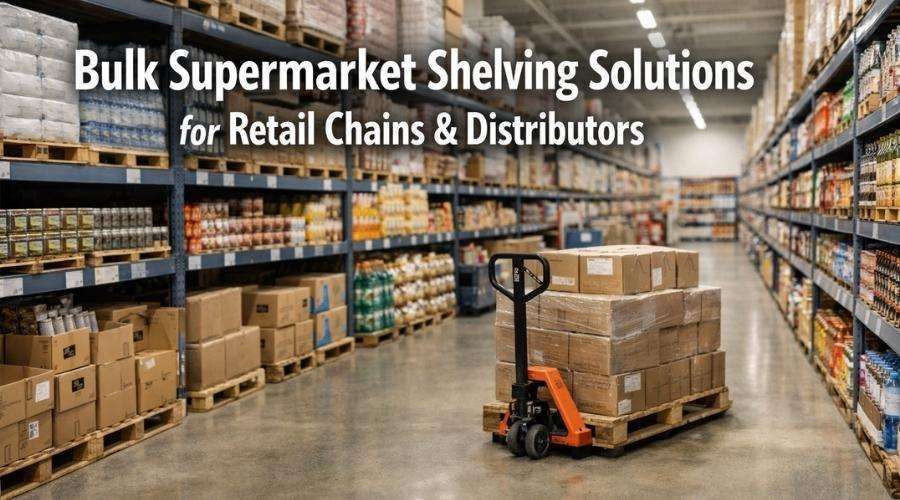
Owners design the layouts and shelves in their supermarkets after lots of analysis. It is not random because a whole psychology plays a key role in the impulsive and planned buying processes. Therefore, retail chains in pharmacy, clothing, bakeries, and various types of businesses need to be careful with it. The decision process is long, and the reason behind that is here. If you are looking for a manufacturer of supermarket shelves, you will find everything in this guide.
There is not just one type of supermarket shelf, but many. When people enter any retail store, they usually find lots of aisles with different kinds of shelves and layouts. Some shelves target impulsive buyers, and some target planned buyers. It shows that there are various kinds of shelves, and here they are.
Get a Free Quote for Supermarket Shelves Today
They are double-sided shelves that you find in most supermarkets. They are the face of a traditional supermarket because of their format. Due to their double-sided face, they provide access from both sides. Therefore, they are an ideal choice for superstores where a maximum number of products need to be presented. Also, they are suitable for limited-space superstores where one can have a few shelves for maximum product filling.
Their name will suggest their purpose. Wall shelves are one-sided shelves that are installed only on walls. They are for dry and also temperature-sensitive products. You can find them in superstores, especially in the dairy and meat sections with air conditioners. Also, they are a popular choice in bakeries that save space for dry products like breads, rusks, and buns.
What is a Gondola End? Gondola end or end cap shelves are the shelves that are at the start or end of aisles. Their objective is to offer high visibility for impulsive buyers. Before customers enter an aisle, they are compelled to pick products that they do not even need. They are usually snacks, chocolates, and toys.
The refrigerated shelves are also available in a wall-shelf format. These shelves serve only fresh products that are temperature-sensitive. They usually have no glass lids because they provide open access for quick pick up. Dairy products, meat, and baked products like cakes need refrigerated shelves. Since they do not have lids, they are not suitable for ice creams and ice cakes.
It could or could not have a refrigerator to keep the products fresh. For instance, bakery products like breads, buns, rusks, and dry cakes are fresh, but they do not need refrigeration. So, such products need fresh-product shelves that are common in superstores and bakeries.
Superstore shelves have a load capacity that needs attention. You need to know the load capacity of shelves before you choose them. Therefore, there are three types of structures that you can find for the selection process. Then the bulk supermarket shelves procurement will be easier.
They have a light structure, which means they have either an aluminum, acrylic, or wooden structure. It depends on the type of products you are going to place in them. Choosing the structure depends on the product type and weight. You will have to select the light shelving structure and material based on the product type. Do not choose wooden shelves if the products are moist. They are suitable for medicines, stationery, light kitchenware, and light FMCGs.
These shelves are suitable for medium-weight products. For instance, FMCGs, hardware, kitchenware, bedding, toys, and many general goods. They have a metallic structure, usually, which is either aluminum or steel. These materials also prevent corrosion and offer long-term support against load and impacts.
Then there are heavy shelves that are only for heavy goods. They are gym items, hardware, food sacks, construction goods, etc. Their purpose is to provide formidable support to heavy goods. Therefore, they can withstand maximum weight against risks of bending, warping, cracking, and collapsing. Many superstores prefer using them for all kinds of products where they do not have to worry about any threat. These shelves are more expensive than the other types. However, they could last longer because of their higher material density.
What happens when you choose the right store layout? First, what is a store layout? It is a shelving format that allows a store owner to manage the goods. Different layouts exist in the supermarket industry, and each layout has pros and cons. What are the 4 main types of store layout? They are grid, loop, herringbone, and free-flow layouts.
The first is a grid layout that allows customers to browse goods easily. It is an ideal choice for large stores where the maximum number of products is placed. Superstores that have almost every variety of products choose a grid layout. It allows customers to move from one aisle to another to find the products they came for. Multiple grids offer varieties that help buyers enter the right aisle based on their grocery needs. Gondola and end-cap shelves are popular shelves in it.
Then we have a loop or racetrack layout that provides a single entrance and exit to customers. Basically, it has wall shelves that offer various categories of products from start to finish. Therefore, it appears like a round racetrack where buyers quickly pick products without taking much time. Some shelves or tables are placed in the center, which provide impulse products. Loop layout is popular in some grocery stores, clothing outlets, and bakeries. This layout is suitable for spacious stores, mostly.
This layout is like a herringbone. There is a wide passage for entrance and exit, and there are multiple shelves on both sides in the form of aisles. This layout is suitable for smaller and medium-sized stores with limited space. It allows segmentation in the form of category aisles.
This layout has no order like aisles, which is why it is called a free-flow layout. It allows visitors to freely move anywhere to select products that actually lead to impulsive buying. This method is usually for small outlets or superstores with a special section with impulse products mostly. You will find this layout mostly in boutiques and clothing stores, and this layout prevents customers from bumping into each other, unlike in aisles.
If you are about to procure bulk supermarket shelves, here are some considerations for you. They are going to help you choose what your store needs. It is about paying attention to small details that help you select the accurate size, type, and other factors of shelves.
The first thing you should consider is the size of your store. You cannot just randomly select shelves for your store until you measure the space in it. Since there is a huge psychology in the shelf’s placement, you will have to pay attention to it. Measure the total area of the store, and estimate the width between the aisles. Usually, the width ranges from 4 feet to 12 feet between aisles. If the width is spacious, there will be less risk of customers bumping into each other.
Then select the layout that suits your store type and space. Grid, loop, herringbone, free-flow, and a few other formats exist for you. Likewise, you will have to choose the types of shelves, like gondola, wall, end-cap, etc. Even though there are subtypes like open, enclosed, air-conditioned, etc. Make a layout depending on the nature of the products you are selling. Bakeries, pharmacies, superstores, meat stores, and clothing stores require different formats.
Similarly, you will have to select the material of the shelves depending on the weight and nature of the product. Moist products or temperature-sensitive goods need corrosion-resistant material for shelves. Therefore, choose stainless steel or aluminum shelves for those and also for heavy products. If you are looking for light shelves, especially for dry and light products, acrylic and wood are the best.
Then the same is for their load-bearing capacity. Inspect the structural strength against the risk of bending and warping of shelves. If you are buying shelves for lightweight materials, you do not have to go for heavy shelves and vice versa.
Select the height and width of shelves based on the store’s size and the layout you choose. You will have to select the height of shelves based on the average height of your customers. Likewise, select the width based on the product type and space in your store. These factors matter a lot when you choose a bulk supermarket shelving supplier.
Do not forget the maintenance difficulty in your selection process. If you cannot clean the shelves, they will cause contamination everywhere. Hygiene is the utmost factor you will have to consider. If your workers can not clean the shelves easily, the germs could penetrate and spoil the sensitive goods.
When you procure supermarket shelves from a bulk manufacturer, you get cost-efficient results. Siyang Hongrui Commercial Equipment Co., Ltd. is a manufacturer that can offer such benefits. You can also choose the size, height, type, and various elements in the shelves for ideal results. Then you will also get reasonable prices with discounts and a worldwide supply.
Selecting supermarket shelves is not as easy as you think. It requires lots of information for the right type, size, and material of shelves. There are more factors involved in the selection process than you can imagine. So, what you need to do is read a guide like this one, and choose a supplier like Siyang Hongrui Commercial Equipment Co., Ltd. Then you will surely get the desired output and long-term advantage in setting products in your superstore.
When you own or
READ FULL